








WLFI lost 95% of its peak value. What comes next for Trump’s crypto venture?
英文原文查看譯文
閱讀字級閱讀正文 ↓
載入圖片中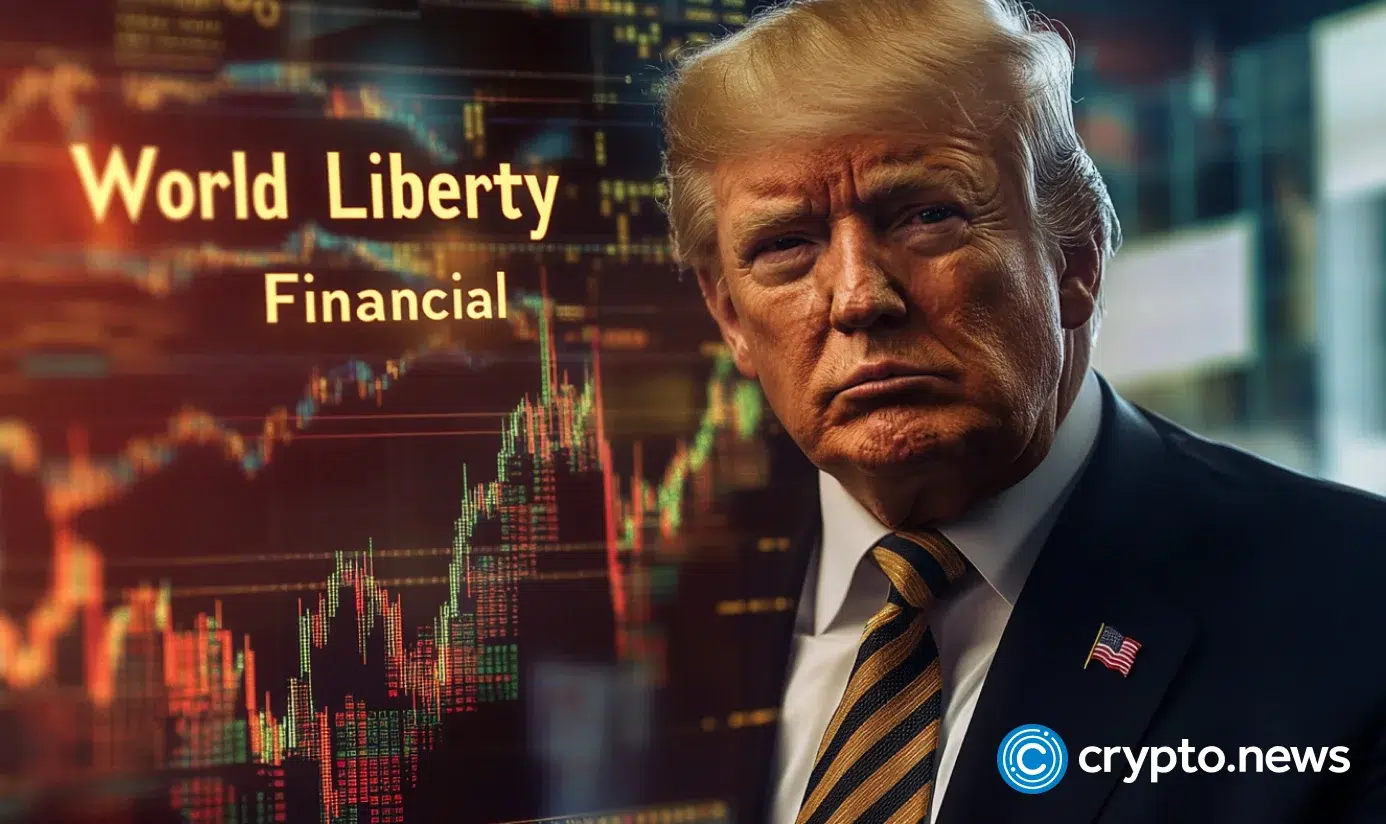
WLFI fell to about USD 0.016 on Nov. 28, roughly 95% below its September 2025 peak against a peak of about USD 0.33 in DefiLlama’s price history. World Liberty Financial, the crypto venture backed by US President Donald Trump and…
Share
WLFI fell to about USD 0.016 on Nov. 28, roughly 95% below its September 2025 peak against a peak of about USD 0.33 in DefiLlama’s price history. World Liberty Financial, the crypto venture backed by US President Donald Trump and his family, said Binance had automatically closed some WLFI perpetual futures positions on both sides of the market, and the exchange said it was reviewing trading and execution data.
• WLFI fell to about USD 0.016 on Nov. 28 against a September 2025 peak near USD 0.33.
• CoinGlass tracked USD 16.89 million in WLFI futures liquidations over 24 hours, including USD 15.18 million from longs.
• A wallet identified as a World Liberty reserve address exchanged about 12,121 ether for roughly USD 20.06 million in stablecoins.
• A World Liberty wallet pledged about 5 billion WLFI to borrow USD 75 million in stablecoins on Dolomite in April.
• CoinGecko showed World Liberty’s USD1 stablecoin at a low of USD 0.9394 before it moved back near USD 1.
The prices leave World Liberty with questions about three parts of its business. Traders want to know how Binance closed positions, lenders have a lower price at which to value any outstanding WLFI collateral, and stablecoin users have seen USD1 briefly depart from its dollar target.
The three records start in different places. Binance has the individual futures settlements, the blockchain can show what a lending account currently owes, and USD1’s issuer can explain redemptions and reserves.
JUST IN: World Liberty Financial faces scrutiny as $USD1 depegs and its $WLFI token crashes 50% On-chain data shows a $60.4M USD1 deposit backing $50.6M in USDC borrowing on Dolomite at a 1.05 health rate, while Jump Crypto reportedly bought discounted $USD1 and redeemed it for… pic.twitter.com/SfILCHZg7P — crypto.news (@cryptodotnews) November 28, 2026
What World Liberty said and what Binance confirmed
World Liberty wrote on X at 12:37 p.m. UTC on Nov. 28 that Binance had automatically closed WLFI perpetual futures positions overnight. It said the closures affected long and short positions and cited reports from users whose positions had been profitable before closure but produced losses when they settled.
The venture said Binance operates its perpetual futures market and controls its risk systems. It said it had no role in the position closures.
Binance responded on X at 2:27 p.m. UTC, saying it was aware of the reports on WLFI perpetual positions. The exchange said its team was “actively reviewing the market activity and execution data” and directed users to customer support.
Binance’s post says the review covers market activity and the trades or settlements recorded in its systems. The post gives no account-level results or timeline for completion.
The token had already fallen on spot markets by the time either statement appeared. A time-stamped comparison by Coindaro put the Coinbase spot price at USD 0.03436 at 04:00 UTC and USD 0.0205 at 06:00 UTC, a drop of about 40% over two hours.
That comparison puts heavy selling on a venue outside Binance within a defined period. It provides a record of what was happening to the tradable token, while account statements would be needed to place any particular futures close inside that timeline.
The public price record shows that holders of the token faced a large decline. It also shows why a trader’s complaint about a derivative has to be checked against the contract and the account involved.
A spot buyer acquires WLFI itself and can hold it while the price moves, subject to the terms of the venue or wallet. Someone who buys a WLFI perpetual takes a long futures position and posts margin to keep it open.
A short futures position gains when the contract falls, before financing and fees. Its performance depends on the price used to open the position, the price assigned to an exit and any fees or funding paid while it was open.
A token’s spot price can be falling while some shorts lose money. A short entered near the bottom can lose if it closes into a rebound, and a trader who opened the position much earlier can have a different result even when both accounts show the same settlement price.
The trade history can answer that question for a specific account. The entry price and position size establish the starting exposure, while the close time, execution or settlement price and charges establish the final result.
A cash balance after the event can include activity outside the contract the user is describing. In a margin account that shares collateral across positions, a change in another position can also affect the funds available to keep a WLFI trade open.
That is why two users can give different accounts of a closure in the same market and both be describing what they saw in their balances. Binance has individual order, margin and settlement records that could establish what produced the changes.
World Liberty’s post gives the complaints a public record. The exchange’s review will matter most if it explains which positions were affected, how they closed and how the settlement values were determined.
How a futures position can close during a crash
Perpetual contracts are designed to track an underlying asset without a set maturity date. The trader puts up margin, and the exchange can take over a position if the collateral allocated to it falls below the level required under the contract’s rules.
A leveraged long is exposed to that risk when the price falls. A leveraged short is exposed when the price rises, and volatile trading can produce forced exits on both sides over the course of the same day.
A position’s maintenance margin is the amount of collateral the venue requires to keep it open. The threshold can vary with exposure, how the account is margined and the exchange’s contract rules.
Binance’s derivatives rules describe the use of a mark price in liquidation. The mark is a reference designed to limit the effect of an isolated contract trade on the calculation, while the last traded price records where an order was just filled.
The index, mark and execution price thus have different jobs. The index tracks reference prices used to value the market, the mark helps determine position value and liquidation risk, and an execution price records where a trade actually took place.
A position might display an unrealized gain using one reference moments before a close, and then settle at a different value. The magnitude and direction of the difference depend on the position and the closing mechanism.
Take a hypothetical short of 100,000 WLFI entered at USD 0.025. With the contract marked at USD 0.018, the position would show a USD 700 gain before funding and fees.
If that same position instead closed at USD 0.026, the price part of the result would be a USD 100 loss. The illustration uses invented values and leaves open what price Binance used for any actual WLFI position.
Binance also documents auto-deleveraging, or ADL. It can reduce positions on the opposing side under an exchange’s rules when ordinary liquidation and insurance arrangements are insufficient to handle losses from positions that have failed.
In that situation a profitable position can be reduced or closed as part of the exchange’s risk process. The result still depends on the contract’s published rules and the price or mechanism used for the reduction.
The phrase “automatically closed” in World Liberty’s statement is broader than the name of that procedure. Binance’s public response said it was reviewing the matter and did not identify ADL as the mechanism used.
The distinction matters for traders seeking an explanation. A margin liquidation would shift attention to their maintenance requirement and the mark price, while an ADL event would bring the opposing positions, insurance arrangements and the applicable priority rules into the picture.
An execution problem could involve different details again, such as the order book available when a market order hit or the price at which a close was recorded. Binance’s own review can check those records against what traders saw in their accounts.
The numbers from public market trackers describe a larger population of trades. CoinGlass data cited by crypto.news showed about USD 16.89 million in WLFI futures liquidations over 24 hours, with USD 15.18 million on the long side and USD 1.71 million on the short side.
Those figures put about 90% of recorded liquidations by reported value on the long side. They cover the tracker’s market snapshot and cannot determine how Binance handled a particular position or how much cash an individual trader lost.
Open interest in the same snapshot fell about 63% to USD 106 million. Part of a change in dollar-denominated exposure can come from the fall in WLFI’s price, so the amount of contracts outstanding in token or contract units would give more detail about how much positioning was actually removed.
The 95% figure depends on where the price series starts
The peak in this headline uses DefiLlama’s WLFI series, which lists USD 0.3313 as the high on Sept. 1, 2025. Against a rounded Nov. 28 trough near USD 0.016, the difference works out to about 95.2%.
Market trackers can report different peaks for the same token. CoinGlass records a Nov. 28 low of USD 0.01579, and its September 2025 high near USD 0.46 puts that comparison at about 96.6%.
The difference can arise from the venues and pairs included and how a provider handles individual trades around launch. A price comparison has to identify the chosen high and the source of the later value when, as here, different feeds give readers materially different launch figures.
The 95% figure describes a move from a high to a low. The token later traded above its trough, with CoinGlass putting it at USD 0.01956 during Saturday’s coverage, down 52.9% over the prior 24 hours in that snapshot.
At USD 0.01956, WLFI was about 94.1% below the DefiLlama peak used here. The token could therefore rebound by more than a fifth from the rounded trough and still sit near a 94% loss from that peak.
The arithmetic grows more pronounced the longer the price decline lasts. From USD 0.016, reaching USD 0.3313 would require a rise of roughly 1,971%, while doubling from the low would leave WLFI at USD 0.032.
That comparison puts a bounce in context. A double-digit move from a low price can sound large and recover only a small portion of the original distance in dollar terms.
The circulating token supply matters for any claim about market value. If one billion tokens are transferable at a given price, the published market value at that price will be different from a day when several billion are counted as circulating.
Multiplying price by circulating supply applies the most recent price to every token included in that calculation. A large position could fetch a different price if it were actually sold against the bids available in the market.
The same issue applies to the USD 213 million in 24-hour spot turnover that CoinGlass tracked. That total aggregates trades over a day and can count the same tokens every time they change hands.
A venue can record heavy turnover with a thin order book between trades. Traders trying to sell in size have to look at the number of bids and their prices at the moment they place the order.
A recovery that holds on several spot pairs would give investors more evidence than a single upward print. The spot books also provide a way to see whether a steadier price is accompanied by larger bids, tighter spreads and more available size on each side.
For WLFI, those details matter to holders who trade the asset and to anyone who accepts it as collateral. A token worth two cents in a price feed might have a smaller realizable value if many coins have to be sold at once.
The ether sale and the Dolomite loan raise different questions
On-chain analysts EmberCN and Lookonchain identified a wallet labeled as World Liberty’s strategic reserve and reported that it exchanged about 12,121 ether for USD 17.58 million in USDC and USD 2.48 million in USD1. The figures come to about USD 20.06 million at the stablecoins’ face value.
That was a change in the assets visible at a labeled address. A swap into stablecoins can change a wallet’s exposure to ether while leaving open where the coins moved afterward.
The reported amounts imply an average sale value of about USD 1,655 per ether. EmberCN put the estimated average acquisition price near USD 3,244, which implies a loss of roughly USD 19.26 million using the reported quantity and proceeds.
The calculation uses the tracker’s attribution, estimated cost and reported proceeds. The inputs describe one identified set of transactions and do not give the company’s full accounts or its realized results across other assets and wallets.
Coindaro traced a withdrawal of about 12,600 ETH from Dolomite by a Safe identified as World Liberty’s several hours before the sharp drop in WLFI. Its account put the ether withdrawal before the swap and the heaviest selling it recorded in the token later still.
The 12,600 figure describes the withdrawal the publication traced, while 12,121 describes ether exposure in the swap estimate from the on-chain trackers. The records cover different transactions and cannot be combined into a single figure for net proceeds.
Withdrawn collateral can leave a lending account with fewer assets supporting a loan, depending on the account it came from and the relevant obligations. To read the withdrawal that way in this case would require matching it to a specific account and checking the balances and permissions that applied before and after.
A separate transaction earlier this year showed why the price of WLFI can affect World Liberty’s financing. In April, crypto.news reported a Dolomite position in which a wallet linked to World Liberty pledged roughly 5 billion WLFI to borrow about USD 75 million in USDC and USD1.
At the time, crypto.news recorded a low around USD 0.077 as the borrowing drew attention. November’s rounded USD 0.016 trough was a further decline of roughly 79% from that April quote.
At the two spot prices, the same nominal 5 billion tokens would be worth USD 385 million and USD 80 million respectively, before market depth and protocol pricing are considered. The difference illustrates how sensitive the collateral leg is to the decline, even though the account could have changed substantially since April.
World Liberty told users in April that it considered the position far from liquidation and said it could add collateral if necessary. Its assessment referred to conditions at the time, when the token had a different market price.
A token-backed loan generally turns a position into spending power without an immediate sale of the posted tokens. The account borrows a separate asset and leaves collateral with the protocol under rules that determine how much it can borrow and when the position comes under pressure.
Dolomite’s borrowing guide explains that an account must maintain collateral above the applicable requirement and that the borrowing capacity depends on the assets involved. The calculation uses the protocol’s own pricing and risk parameters.
At USD 0.016, 5 billion tokens would have a simple quoted value of USD 80 million. That calculation applies the same price to every token and says nothing about the loan balance on Nov. 28, what oracle value the protocol used or how much could actually be recovered by selling the collateral.
For illustration, a USD 40 million loan against USD 80 million of quoted collateral would have a 50% loan-to-value ratio. If the collateral price then halved and every other input stayed fixed, the ratio would rise to 100%.
The example is independent of the World Liberty account. Actual loan health would depend on the current balance, collateral and pricing rules, and can change after any repayment, additional deposit or change in the protocol’s parameters.
A lender also has to consider what a liquidation can deliver. A protocol can value every token in a collateral position using its reference price, while a liquidator who tries to sell a large block has to find enough buyers to take it.
Take a hypothetical liquidation that leaves a liquidator with 10 million tokens priced at USD 0.016 in the account. If there are buyers for only 2 million at that price and the remaining tokens can fetch an average of USD 0.012, total proceeds from those sales would be USD 128,000 before costs.
That is USD 32,000 below the starting mark. At the same headline price, a smaller position with enough buyers to take the whole block can produce proceeds much closer to its quoted value.
A liquidation can also proceed in parts, and some liquidators may be able to dispose of collateral outside the displayed spot book. That makes order depth a useful observation about immediate execution and a limited measure of what a protocol could recover in a particular event.
A repayment lowers debt, while posting more eligible collateral increases the assets securing it. Both can improve the displayed health of a loan, though one frees the account from part of its liability and the other commits more assets to the position.
A reserve wallet receiving USDC and USD1 would have liquid assets available for several purposes. To conclude that those proceeds repaid the Dolomite loan, an observer would need to match the funds with a repayment in the specific borrowing account.
A transfer between addresses is one part of that evidence. The next part is an identifiable action on the lending contract, such as a repayment or deposit, together with a change in the outstanding position.
Publication timing puts another limit on the story. A reported ether swap and a later drop in WLFI provide a sequence, while proving that either drove the other would take additional evidence about orders, collateral or how traders responded.
The debt figure that readers need now is the balance in any outstanding account at a stated time. The April transaction shows the scale of the borrowing arrangement at inception, and the November price shows why its present terms and balances deserve a fresh check.
A lower token price changes the value of votes and collateral differently
World Liberty describes WLFI as a governance token. Holding it provides a way to participate under the project’s governance rules, while the holder’s rights depend on the applicable terms and whether the tokens are eligible for the action in question.
Someone buying the token on an exchange gets exposure to its market price. The purchase does not by itself give that person stock in World Liberty or a contractual claim on the assets BitGo holds for USD1 redemption.
A dollar price drop changes how much it costs to acquire a given number of transferable tokens. The usable voting power depends on the project’s rules, the kind of wallet or custody arrangement involved and the support needed to pass individual proposals.
World Liberty has also tied some incentives to the time holders commit their tokens. Its current governance page describes a minimum 180-day staking lock and potential rewards paid in USD1, with one personally cast vote required for each full 90 days a position has been open at the time of claim.
That arrangement gives a token holder a choice about liquidity. Someone who enters the lock can be eligible for rewards under the program and must wait through the lock period before withdrawing the staked tokens.
A February governance proposal set out earlier plans for staking-based participation and USD1 incentives. The project’s live program page is the more relevant record for current claim terms, since proposals and eventual product rules can differ.
The original token distribution has separate restrictions. The project’s April vesting proposal covered about 17.04 billion locked early-supporter tokens and about 45.24 billion founder, team, adviser and partner tokens.
The proposal described a two-year wait before releases begin for participants who accept the applicable terms. It specified a further two-year linear release for participating early supporters and a three-year linear release for participating founders and other covered holders under the separate terms.
For the latter group, the proposal set out a 10% burn on the portion included under the new arrangement. The maximum in the proposal was about 4.52 billion tokens if all eligible holders in that group opted in.
Tokenomist’s analysis of the vote put support at about 99.9% of votes cast and reported that voting closed on May 6, 2026. It identified a May 6, 2028, cliff in a deployed unlock contract, with that contract’s vesting scheduled through May 6, 2031.
The contract dates provide a way to check what was implemented for the allocation it covers. The vote total shows support among votes cast, while the project’s proposed terms still make the size of the burn contingent on participation.
That maximum and an executed burn answer different questions. To establish the current supply, an observer would need to match the implementation and holder elections to the relevant on-chain records, including any actual transfers to a burn address or changes made by the token contract.
A vesting cliff is a period before scheduled release begins. It can delay transferable supply even if the tokens are included in a total allocation and can be used in governance according to the applicable rules.
Linear vesting distributes eligible tokens over an interval as it elapses. The market sees a sale only if someone who can move newly available tokens decides to offer them and a trade takes place.
For a reader following Saturday’s collapse, this produces a practical question about the specific wallets thought to have sold. A deposit to an exchange can be tested against the allocation, the holder’s release status and the deposit time, while identification of an actual seller takes more than seeing a token become transferable.
A future update could narrow the uncertainty by giving the numbers that are transferable, locked, staked and eligible to vote as of the same date. Those figures would show which changes can affect trading supply and which relate to how token holders participate in the project.
Justin Sun’s demand for delisting adds pressure on exchanges
Tron founder Justin Sun used the Nov. 28 sell-off to call for exchanges to delist WLFI and USD1 and restrict deposits. Sun accused World Liberty of allowing insiders to cash out through circular borrowing, selling improperly and freezing investors’ assets unlawfully.
His public post supplied no transaction records tying those accusations to the sell-off. World Liberty and Sun have previously given different accounts of their dealings and taken their dispute to court.
The dispute dates back to WLFI’s first trading days. Sun was an early backer, and a wallet linked to him was later blocked from moving WLFI after the token began trading in September 2025.
Sun and two affiliated companies filed a federal complaint in Northern California in April. They alleged that World Liberty blocked them from transferring tokens and participating in governance and challenged the company’s conduct in connection with those restrictions.
World Liberty brought a defamation suit in May. It alleged that an entity linked to Sun moved some WLFI to Binance and that Sun took part in an effort to drive down the price, and it defended the restrictions under terms it said had been disclosed.
The California complaint put the plaintiffs’ purchases at about 3 billion WLFI for USD 45 million and described another 1 billion received after Sun became an adviser. Those figures are claims in the court record and cover different types of allocations.
The economics of each allocation can depend on what the buyer paid, when the holder can transfer it and which restrictions apply. Saturday’s exchange price alone therefore gives little about what could be sold by the plaintiffs or the value they would realize.
The allegations in the two cases describe competing accounts. The court filings explain why Sun has a stake in both the token price and the rules under which transfers can be blocked.
The exchange precedent is narrower than his Nov. 28 request. HTX, where Sun has served on the global advisory board, removed USD1 trading in June after saying World Liberty had frozen certain exchange-linked addresses.
HTX said it would convert eligible USD1 balances into USDT one for one and suspended four pairs that included WLFI/USDT. World Liberty cited its sanctions compliance controls in connection with the restrictions.
Flipster announced a separate removal of WLFI/USDT and USD1/USDT spot pairs in September. Its notice gave a specific effective time, which allowed customers to distinguish the pairs affected from trading arrangements elsewhere.
A Binance decision would have its own scope and timetable. The exchange could address the futures review, change margin terms for a contract, restrict new positions or take action on a spot pair, and each step would affect a different set of users.
A spot delisting can take away a place to buy or sell the asset without changing the asset’s contract on the blockchain. The exchange might keep withdrawals open for a stated period or apply separate rules to deposits and conversions.
The June and September actions give examples of the details to expect in an exchange notice. A market operator can take away a pair while offering eligible customers a conversion, or it can name the time after which orders on that pair can no longer trade.
For a customer who still holds a balance, the next question is what can be withdrawn and on which network. A platform that stops accepting new deposits might still honor withdrawals while existing orders are removed.
A change confined to a perpetual contract would alter access to leveraged exposure on that venue. Spot holders would need a notice that names their pair, asset or transfer service to determine how their account is affected.
Sun’s request applies to several products and actions at once. Binance’s public response addresses the futures reports, leaving any change to listings or transfer services to a separate notice.
Exchange decisions could affect liquidity if a share of orders moves to fewer books. The result would depend on how much activity the affected pairs carried and how much of that trading other venues can absorb.
That is especially relevant for USD1 users who may rely on an exchange to convert a balance to dollars or another stablecoin. Access to another venue or to direct issuer redemption can determine how costly it is to move funds if a familiar pair closes.
USD1’s brief drop puts the redemption record in focus
USD1 traded as low as USD 0.9394 on Nov. 28, according to CoinGecko’s price history. Crypto.news later cited a quote of USD 0.9948, putting it back within about half a cent of its one-dollar target in that snapshot.
Those two trades or price observations describe a temporary discount and a subsequent recovery in the feed. The duration, size and venues involved are needed to establish how widely holders could trade at the lower price.
USD1 has a different function from WLFI. World Liberty markets USD1 as a dollar stablecoin, and its documentation says BitGo handles issuance and redemption.
The issuer’s ability to redeem and an exchange’s available bids are separate parts of that arrangement. On a secondary market, a holder can accept a lower price to move quickly into another asset, even if eligible customers have a route to redeem with the issuer at the stated rate.
Suppose a holder sold 10,000 USD1 at the reported low of USD 0.9394. Ignoring fees, the proceeds would be USD 9,394, or USD 606 below the dollar face value.
That is an illustration of what an actual sale at the quote would produce. A holder who kept the tokens through the recovery, or redeemed at par under the issuer’s rules, would have a different result.
The price can also depend on the currency on the other side of the trade. A quote for USD1 against USDT measures what the market paid in another token, so an exact dollar comparison requires checking that token’s dollar price at the same time.
An exchange pair can register a large discount on a small number of trades. The next check is whether deeper pairs recorded similar prices and whether holders could still withdraw and reach other markets while the discount was present.
Crypto.news tracked an earlier USD1 transfer in August, when a Solana wallet labeled as Fireblocks Custody sent 30 million USD1 to Binance, according to Onchain Lens. The movement established a deposit route into the exchange and left the beneficial owner and purpose of the transfer unanswered.
The same distinction applies during a discount. An exchange deposit can occur before a sale or as part of a custody transfer, while an issuer redemption would have its own records and can change the redeemable supply.
There are costs and limits to arbitrage. Someone buying at a discount needs exchange liquidity, the ability to move the tokens, access to the redemption channel and enough time for the process to finish.
A discount can therefore persist while those steps are being worked through. A recovery can show bids returning even if the public has no record of which buyers used the issuer to redeem and which simply held or resold the coins.
BitGo’s attestation page listed its September 2026 reserve report among the published reports visible at the time of reporting. The Sept. 30 examination reported roughly USD 4.417 billion in redemption assets against about 4.416 billion redeemable USD1 tokens.
The published reserve figures included deposits at US banks and holdings in a government money market fund. The accounting report examines the reserve statement as of its specified date, so the date is as important as the dollar figures when assessing what it covers.
The November price dip took place almost two months later. A newer reserve statement would address a later balance and a statement from BitGo on redemption activity during the sell-off would answer a different question about the hours in which USD1 moved away from par.
Secondary-market prices and reserves can be checked independently. The trading question is whether several liquid USD1 pairs moved together, how much business got done below par and how long the discount lasted.
The reserve question concerns assets available to support redeemable tokens and whether they can be used on the terms promised to holders. A November balance, redemption volumes and information about the issuer’s processing during the sell-off would provide a more direct account of that period.
Cross-chain supply can complicate a quick comparison. A token may exist natively on several networks, and bridged versions can represent coins held elsewhere, so adding every number shown on block explorers can double-count some representations.
World Liberty’s proof-of-reserves documentation describes a dashboard that reads reserve data from a Chainlink oracle on Ethereum. It combines that value with tracked supply across supported chains to display a coverage ratio.
The reserve read and supply read can each have its own update time. A viewer checking a historic discount needs the values and timestamps from the relevant hours to see whether they describe the same period.
The dashboard’s reported reserve value and the attestation provide different kinds of evidence. The former shows values drawn from the feed and chain data available to the tool, while the latter records the results of an outside accountant’s examination for the stated date. An exchange price may draw on a different set of venues and token representations altogether.
Borrowing markets have a separate reason to watch USD1. If a protocol values it as collateral or lets users borrow it, the oracle treatment and the venue’s rules determine whether a market discount affects account health.
A user who owes a fixed number of USD1 can see its market value change while still owing the same number of tokens. A protocol’s position record is needed to determine how that shows up in that user’s margin or liquidation calculation.
The concern for World Liberty is whether the token is straightforward to use and convert during periods when WLFI is under pressure. Trading near par later on Saturday gives readers one observation, while issuer data and activity across markets would say more about how the system behaved through the entire move.
World Liberty’s bank proposal creates a separate test for USD1
World Liberty has a longer-term plan to move USD1’s issuance and reserves to its own proposed national trust bank. The Office of the Comptroller of the Currency granted World Liberty Trust Company preliminary conditional approval on Aug. 14.
Under the plan, the proposed bank would issue and redeem USD1, manage reserves and provide digital asset custody. It would take over the stablecoin’s reserve assets and corresponding liabilities from BitGo if authorized to open and the transfer goes ahead.
The regulator’s letter provides a point of comparison for what comes next. It calls for the organizers to complete preopening requirements and receive final authorization before the proposed bank begins business.
Crypto.news’ coverage of the OCC decision reported that eligible capital must be at least USD 20 million. The capital condition applies to the proposed bank, while the reserves backing outstanding USD1 are a separate pool of assets.
The transfer, if completed, would change where USD1 users look for redemption rules and reserve reporting. A dated handover disclosure could identify the last BitGo reporting period and the first period reported by the new issuer.
The Nov. 28 price episode adds a question that applies under either structure. Market makers and holders need to know which party accepts redemption orders, what terms apply and whether the system can process orders when secondary-market selling rises.
For now, World Liberty’s public USD1 materials identify BitGo as the issuer. An OCC opening decision and a documented transfer would give readers specific events against which to check any future change.
What would answer the open questions for World Liberty
Binance can address the most immediate dispute by explaining how the futures positions closed. A notice that names the contract and incident window, identifies the mechanism and explains the reference and settlement prices would give users details they could compare with account records.
The same disclosure could distinguish positions closed for insufficient margin from positions reduced through another process. It could also say whether the review found discrepancies between the contract rules and how specific settlements were processed.
A token price recovery could happen before any such finding comes out. That would help spot holders who still have exposure and leave participants in already closed futures positions with the results shown in their account ledgers unless the exchange adjusts them.
World Liberty has more information to provide on its financing. A dated tally of outstanding token-backed debt, posted collateral and the applicable risk thresholds would let observers use current figures instead of carrying the USD 75 million April headline into November.
A useful financing update would also identify how much of the collateral is liquid under the protocol’s rules. A value at a published market price gives readers the size of the stake, while a measure of sales capacity gives a lender information about possible recovery.
A record of repayments or deposits could also clarify how the ether swap fits. Wallet labels and trade receipts can be checked, and a project disclosure linking funds to specific borrowing accounts would give those transactions a stated purpose.
The project’s governance discussion can cover the supply side of the price. An update on which allocations have elected vesting terms, which tokens have actually been burned and when releases can begin would show how much voting and transferable supply is available under the present rules.
USD1 has its own next check at the issuer. A dated reserve examination and an account of minting and redemption around the discount would give two views of whether trading stayed close to the stablecoin’s intended mechanics when WLFI fell.
Those disclosures can arrive at different times. A precise Binance explanation could resolve how positions closed while leaving the current debt and the stablecoin’s November reserve balance open.
World Liberty’s business can keep operating through a fall in WLFI. The ability to use the token as collateral, retain access to liquid markets and keep users confident they can convert USD1 depends on what each of those systems can show under stress.
The first new evidence could be a notice from Binance, an observable transaction in a lending account or a fresh statement from BitGo. Each would address a question raised by the sell-off, and none can be read in place of the records held by the other parties.
What to watch
• Binance’s public findings. Look for the incident window, the affected contract, the closing mechanism and how the exchange calculated settlements.
• Live Dolomite balances. Compare current debt, collateral and relevant risk parameters with the position reported in April.
• The reserve wallet’s next transactions. Check for identifiable repayments, deposits or transfers following the reported ether sale.
• Spot liquidity and listing notices. Compare trading depth across venues and check which pairs, contracts or transfer services any exchange notice actually names.
• USD1 redemption and reserves. Track prices across liquid pairs, any issuer disclosure on Nov. 28 activity and the reference date of the next reserve report.
FAQs
Did WLFI lose 95% in one day?
The headline compares a September 2025 high of USD 0.3313 from DefiLlama with a Nov. 28 trough near USD 0.016. CoinGlass showed a separate 52.9% 24-hour decline at its reported snapshot.
What did Binance say about the WLFI futures closures?
Binance said it was aware of reports involving WLFI perpetual positions and was reviewing market activity and execution data. Its statement directed users to customer support and gave no findings about the closure mechanism.
Why could a short trader report a loss during a sell-off?
The result depends on the trader’s entry and closing prices, along with funding and fees. An unrealized gain shown before the close can be different from the final account result if the price assigned to the close changes.
Did Binance confirm it used auto-deleveraging?
Binance’s public Nov. 28 response did not name the closure mechanism. Auto-deleveraging is a specific exchange procedure and its use would require confirmation from the review or reliable execution records.
Did World Liberty sell WLFI to pay back a loan?
The tracked wallet sale involved ether, which the wallet exchanged for USDC and USD1. The reported swaps do not establish what happened to the proceeds or the current balance of the April Dolomite position.
Why does the price of WLFI matter to Dolomite borrowers?
Where WLFI is eligible collateral, a lower protocol valuation can reduce how much of the debt the collateral covers. Loan health also depends on the outstanding debt, any other collateral and the market’s parameters and oracle.
Did USD1 lose its dollar peg?
CoinGecko recorded a Nov. 28 low of USD 0.9394 before the price returned close to one dollar in later reporting. The price record shows a secondary-market discount, while reserve coverage and issuer redemptions require their own evidence.
What would make the situation clearer?
A Binance incident report, current balances for the relevant lending account and newer USD1 reserve or redemption disclosures would address the three main open questions. Each source can confirm events within its own scope. This is educational analysis, not investment advice.
Disclaimer: This article is for general information and does not provide investment, tax or legal advice. The margin, loan and stablecoin examples are illustrative and do not describe individual settlements or forecast recovery. WLFI and USD1 can lose value, and exchange rules, token restrictions, trading prices and reserve balances may change after the reporting date. Information reflects sources available on Nov. 29, 2026.